

Top 5½ books of 2024
It’s that time of year when I like to do a round up of my top reads of the year. I spent a little time making a list and then crossing out and adding, followed by more crossing out and adding. Which is always the way, and it means I read some great books and there were some close contenders. Speaking of which, for some reason a number of the books I read in the first half of the year were flops for me which was slightly bewildering. Does that ever happen to you? Anyway, I’m happy to report that books read in roughly the second half of the year managed to make up for ones I wanted to chuck against the wall.
So, here we go:

Despite the fact I bought this book of my own free will and it was sitting on my shelf for a few years, I couldn’t face pulling it out because I’d heard so many people who had read it use words such as ‘brutal’ and ‘depressing’ when talking about it. I wasn’t sure I could face it. But then someone in my online book club chose it and that was it, the book was pulled out. And honestly? I was hooked from the very first page. Yes, Douglas Stuart’s Booker prize winning tome is far from an easy, light read. But from the very opening page I was rooting for young Shuggie in a way that literally took my breath away. This is a long book, and I read it in a week, bunking off from other tasks I should have been doing. Born in an impoverished part of Glasgow, all Shuggie wants is for his mum to be well, and to be free from the alcoholism that plagues her. And as a reader, I desperately wanted Agnes to be well too, so that she could love Shuggie in the way he deserved to be loved.
This is beautiful, powerful, heart rending writing, filled with the kind of detail that is only possible from the author having lived some of these experiences himself. If I were pushed to state my book of the year, I’d go for Shuggie. The review on the front calls it ‘a novel of rare and lasting beauty’ and I couldn’t agree more. It is devastating, but also devastatingly beautiful and it will stay with me for many years.

Eilis is a young woman living in a small town in Ireland in the 1950’s, who is offered the opportunity to emigrate to Brooklyn. Although close to her mother and sister, she is encouraged to go and once there, sets about carving a new life and work for herself. While her future initially seems rosy in the US, particularly after falling for Tony who comes from a big Italian family, she receives heartbreaking news that pulls her back to Ireland and makes her question everything she had come to believe about her new life.
Awash with wry, touching observations as Eilis navigates a new land, new love and keeping one foot in her old world and another in her new, I loved this intelligent, character-driven novel and will definitely read the sequel at some point, Long Island.

Sometimes it happens to me that I’ve so enjoyed a setting of a book that I want to read something else set there. This is exactly what happened with my previous read, where Brooklyn feels utterly distinct and separate from New York City. A Tree Grows in Brooklyn (written in 1943) had been on my radar for a few years but I decided to read it straight after Brooklyn, winding the clock back another fifty years to the early twentieth century. As with Douglas Stuart’s writing, Betty Smith mined her own personal experience of being raised in Brooklyn’s Williamsburg slums and again, a little like Shuggie, I adored the novel’s heroine, plucky young, bookish Francie Nolan.
This is an unsentimental, stark account of being raised in poverty which deals with issues such as the alcoholism of Francie’s father (eeek, another alcoholic parent), the blatant favouritism her mother demonstrates towards Francie’s brother and trying to learn the codes to cope in a vast slum school. Yes, life is hard for Francie. But no matter what it throws at her, she refuses to be bowed and uses her intelligence and skills of observation to make sure she can survive and even thrive in this kind of environment.
While the novel’s setting may be bleak at times, the book itself is anything but. Shot through with a warmth, laugh-out-loud humour and tenderness that revolves around a large cast of colourful family members and neighbours, this book is a gem which I can’t quite believe I’d never read before. The New York Times has described it as ‘One of the books of the century’ and I wouldn’t disagree.
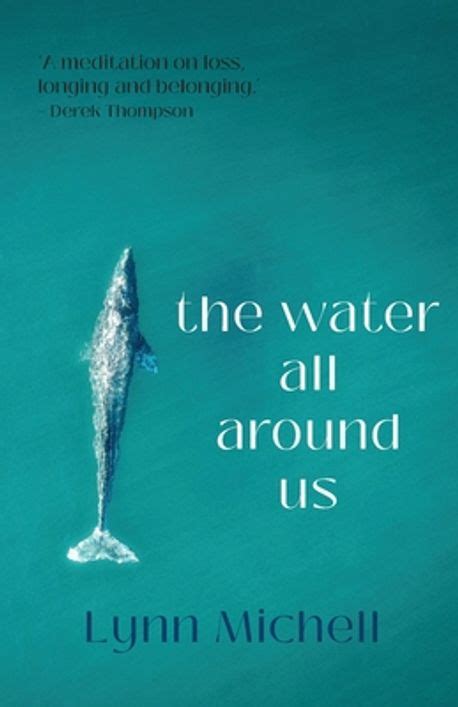
I think this was my surprise book of the year. Just before I headed to Scotland, I pulled this off my shelf as remembered that it was set there. Set on an unnamed Scottish island, the story revolves around three different narratives. First there is young Fenn, the daughter of crofters who, having not lived there long, finds it hard to be accepted by the islanders and spends inordinate amounts of time alone on the islands wild beaches. Jess was an American marathon swimmer who is running from something, though what this is only slowly and gently unfolds over time. Finally, and most unusually, we have the perspective of a young male whale who has been separated from his pod and is searching looking for them, finding himself beached on the island (this scene happens right at the start so it’s not a spoiler) while the islanders desperately try to help him.
I thought this was such an unusual, poignant novel. I think it’s incredibly hard to write from the perspective of a non-human creature without anthropomorphising, but I think Lynn Michell handles it fantastically. As these three lives converge on the island’s white-sanded beach, it sensitively raises questions of belonging, dealing with grief and the perils of our changing oceans.

I went to a book festival while I was in Scotland and heard Linda Cracknell talking about a different, more recent book (Doubling Back). Whilst that also sounded fascinating, I decided to buy this beautiful, slim little volume of essays. Vital to Cracknell’s writing is Susan Sontag’s advice to Love words, agonise over sentences, and pay attention to the world and this shines through in each and every sentence. Her thoughtful and thought-provoking essays offers wonderful tools and suggestions for anyone wishing to write in a way that roots us more in landscape, or for those who love to be out in nature and wish to hone their skills of observation and attentive looking.
Her writing reminded me a little of Robert Macfarlane’s (if you’ve not read any of his books, you definitely need to look him up) and I also loved her adventurous spirit as a solo woman, for example travelling by bike out to a small island only connected to the mainland at low tide and retracing her parents steps from seven decades previously as she embarks on a three day trek.

‘The humble bicycle and the spirit of the human being. Together, it transpires, we can perform miracles.’
The reason this is number 5 ½ has nothing to do with it being half a book or that it has any less merit than the others mentioned. It’s simply because I’d already compiled my 2024 list and posted my blog. But I had to add it to my list. On my last day in Scotland I browsed in the wonderful Highland Bookshop in Fort William and spotted it. I needed something to read for my long train journey home and as soon I saw it, I knew this would be the book to keep me company. I had met Lee a couple of weeks previously in Knoydart and we’d had a brilliant few meet ups of dinner, lots of chatting, a night in the pub that ended with whisky tasting and a cold loch swim (which helped with the whisky head).
I know absolutely nothing about the world of competitive cycling and while this is about Lee’s journey of finding a healthy relationship with this sport she’s so passionate about (as well as some frankly mind boggling accounts of physical + mental challenges), it’s also about so much more. Lee explores far-ranging themes such as attentiveness, access to wild spaces, the ways our system fails restless children, what success really looks like, loss, friendship, the power of storytelling and community, the kindness of strangers, finding balance and a great deal besides. Filled with warmth, wisdom, humour and compassion, it doesn’t matter if you’ve never been on a bike or competed in a race, this is definitely a book to read and press into the hands of others. It left me feeling renewed, restored in spirit and yes, eager to use my humble bike more.
Other noteworthy books:
📚 The Reluctant Fundamentalist by Moshin Hamid 📚 The Kids by Hannah Lowe (poetry) 📚 The Manningtree Witches by A.K.Blakemore 📚 Piranesi by Susanna Clark 📚 Supporting Cast by Kit de Waal 📚 The Last Sunset in the West: Britain’s vanishing West coast orcas by Natalie Sanders
Thank you for reading this. How about you? I always love good book recommendations and would welcome any fantastic reads from your year.
Wishing you a very Happy Christmas and here’s hoping that your 2025 is filled with wonder, laughter and, of course, some very good books 🎄
Compliment this blog post with my top books of 2023, of 2022 and my favourite books of reading outside my ethnicity in 2021.


Leave a Reply
Want to join the discussion?Feel free to contribute!